How to Spot a Spam SEO Provider

We’ve all gotten them.
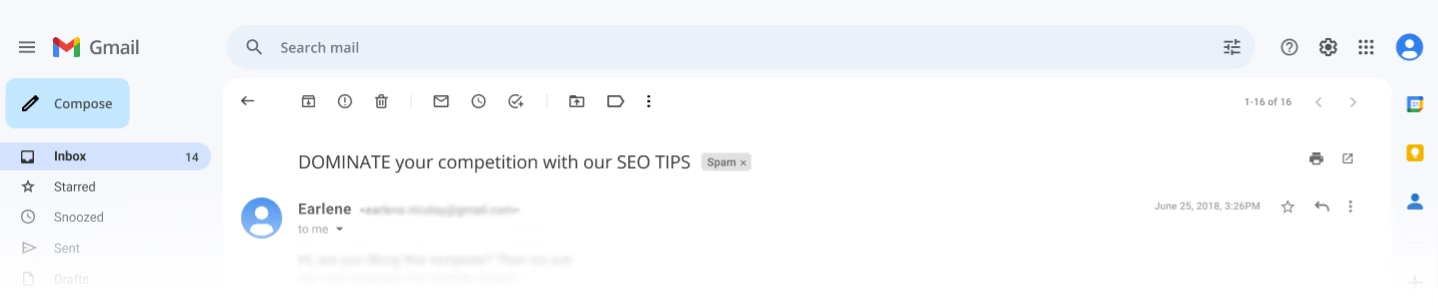
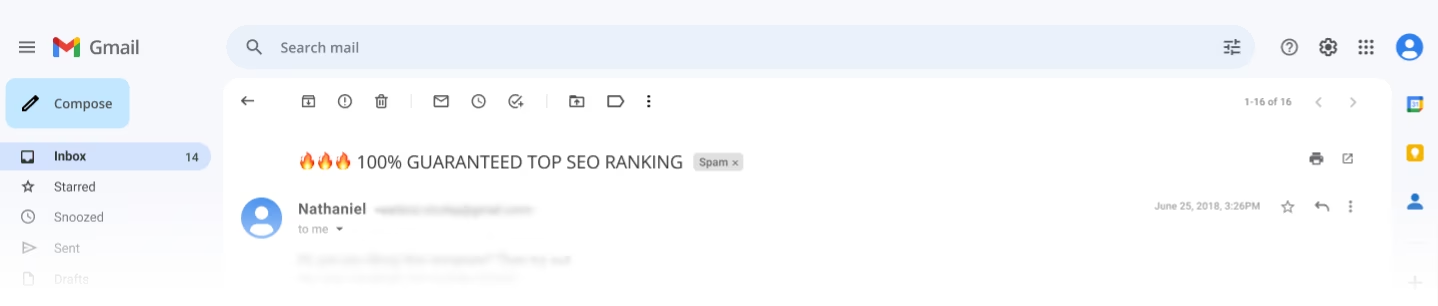
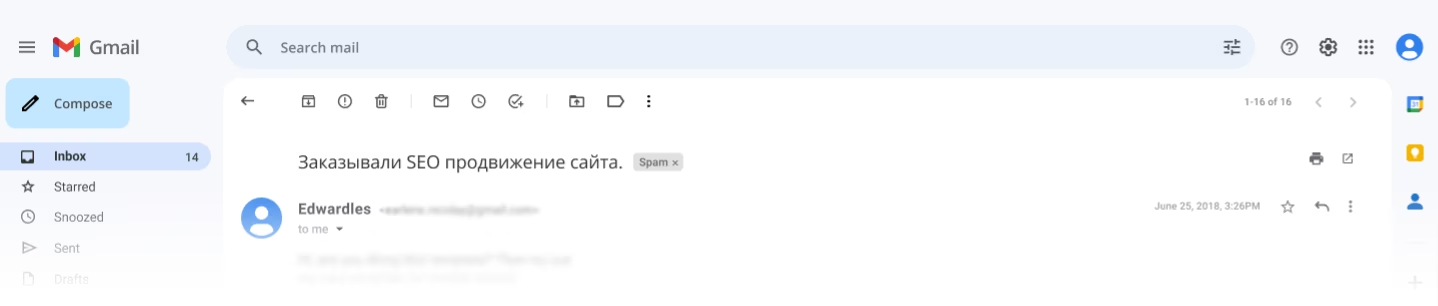
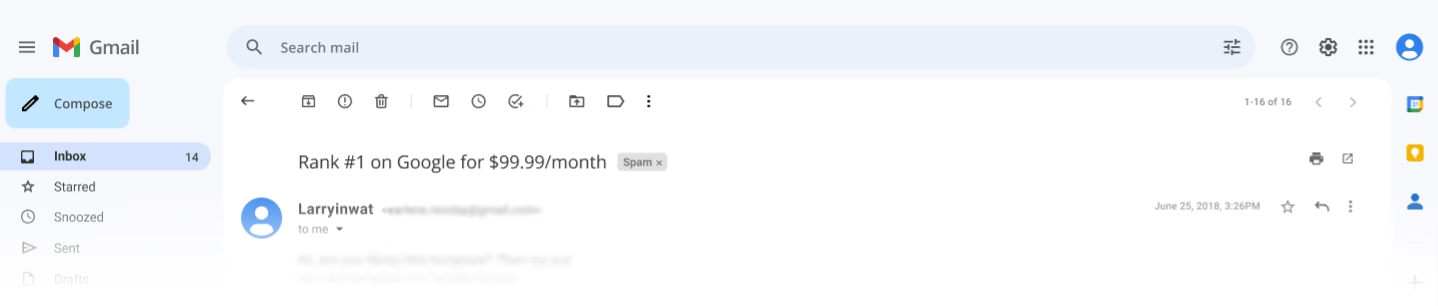
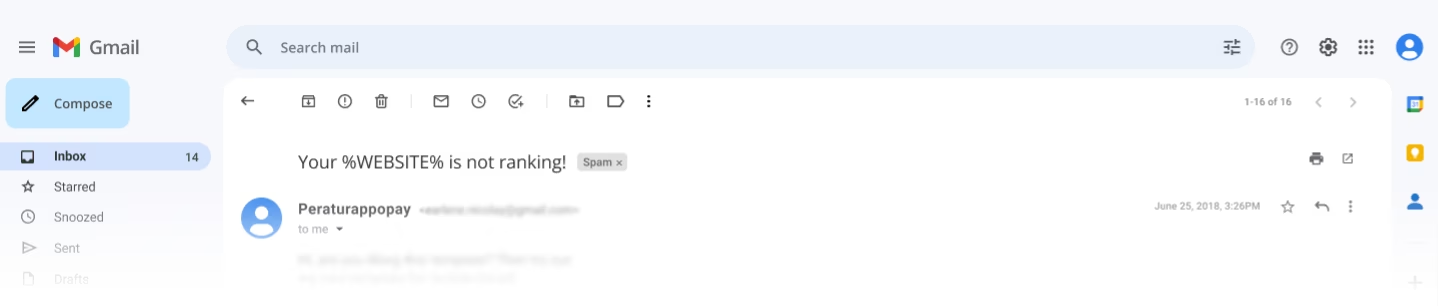
The relentless emails promising first page ranking on Google from a company that, despite their tremendous amount of research, still managed to get your name wrong.
Short on time? Skip ahead to the Summary.
What is Search Engine Optimization (SEO)?
Every search engine has a set of Ranking Factors they use to calculate and determine the results for your query. Some of these factors have been confirmed, more are theorized, and others still are hotly debated. These factors vary slightly from engine to engine, and each company is continually rolling out updates that modify how their algorithm ranks websites.
Search Engine Optimization is the ongoing strategy and series of actions to increase your rank for a set of keywords — this very article you’re reading right now is part of our ongoing SEO strategy.
Spam or Not
We did our research, read through hundreds of emails and form submissions, and here are our top red flags for spam SEO providers.
Misleading Guarantees and Promises
In their message they’ll make claims of reaching the front page of Google, some even going as far as guaranteeing the much sought-after first result. But therein lies the first major issue — first ranking for what keywords? Typically, this is where the trick comes in and they’ll help you rank for keywords that sound good at face value, but virtually no one ever uses it as an actual search query. This low search volume means no competition and without any competition it’s easy to rank high.
Unbeatable Triple Turbo Charged High Rocket Quality Goldmine Results
While we didn’t come across this exact combination (yet), it is an amalgamation of various messages with the same theme of flashy buzz words meant to dazzle and impress. Gimmicky words are perfectly cromulent in the right context but SEO writing is not one of those cases. And if their first sales pitch to you is all flash and no substance, you can already guess the quality of work you’re going to receive.
“Google SEO Certified”
Quite simply, this qualification does not exist in any official capacity from Google. They have never offered SEO certification courses and anyone claiming to be certified by Google is dishonest. This is not to be confused with Search Engine Marketing (SEM) certification, which Google does offer.
Google’s goal with their search engine algorithm has been to deliver high quality authentic content that matches the search query. The more insight into the inner workings Google provides, the more people will be able to use Black Hat tactics to game the system, leading to an influx of spam results and decreasing the usefulness of the search engine.
Blog/Guest Content
Along the lines of delivering high quality authentic content, spammers will message and offer to write articles (sometimes for free) to generate this content for your website. Unfortunately the content they provide is typically stolen, auto-generated, or otherwise so poor as to provide no benefit to your site. Their real goal is to include links back to themselves and through this make their own site seem more legitimate. With that in mind, their request goes from benevolent (free content for you) to parasitic (help validate my site for Google).
This weaponization of what was once a legitimate thing is exactly why Google is so secretive about their algorithm and ranking factors. People will find a way to exploit what they can.
Directory Listings
Don’t get us wrong, having your company listed in directories (particularly directories local to you) is a huge benefit. That said, spammers offering to list your website in 2,500 (or more) directories for a low fee is suspect. How many of the directories are legitimate? How many are actually relevant to your business? How many are directory farms with the sole purpose of having a lot of content to get page views and generate ad revenue?
What can be good can also be misused. Any directories you should be on is a task you can do yourself or with the assistance of a reputable local agency.
Black Hat Tactics
There are White Hat Tactics — writing good, authentic, and informative content — and then there are the Black Hat Tactics. The ones that attempt to trick search engines into providing you with an artificial rank through duplicity. Hidden text, keyword stuffing, paid links, ai/mass generated content; these are some of the strategies to watch out for and avoid. Google has helpfully provided a page outlining their Spam Policies with examples.
If you feel like the SEO recommendations being provided are gaming the system, they probably are. And while you might see a short term boost, the long term consequences of being completely delisted by search engines when you are caught (and you will be) could take years to fully undo and regain ranking.
Summary
When it comes to finding a good SEO provider, there’s a lot to consider, from their approach to how they are able to support you and not themselves. If they are making outlandish claims or suspicious guarantees, keep searching.
We’ll feature some helpful tips in another upcoming article.
More From Devon
Related Articles
We’re here
for you.
WaterWerks has a long history of building long term relationships, both internally and externally.
From team members that have been with us for over a decade to clients that have trusted WaterWerks for even longer, we’re proud of the work we’ve all accomplished together.
Ready to work with an Agency that cares about you as much as they do the project?
We’re excited to see what we can build for you.